

The Linda Lindas have partnered with PLUS1 so that $1 from every ticket sold on our tour will go towards supporting organizations working for equity, access, and dignity for all. www.plus1.org
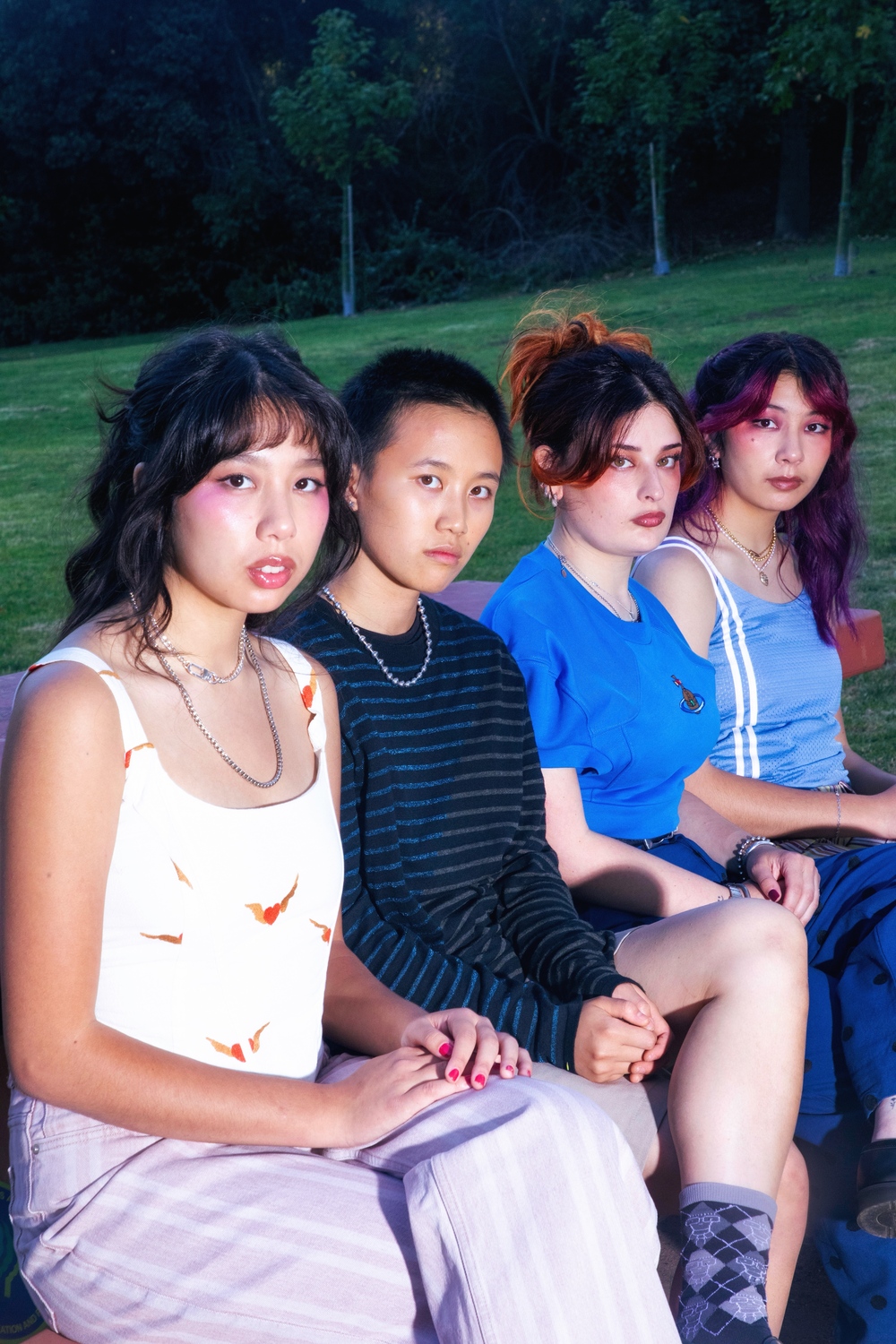
Every day around 4 p.m., The Linda Lindas put down their instruments and jumped in the pool. They used these aquatic moments as a reset during a week-long writing retreat in Palm Springs where phones were banned, the outside world was suspended, and four young people who’ve been making music since tweenhood were writing together in the same room for the first time.
In the process, they figured out who they really are.
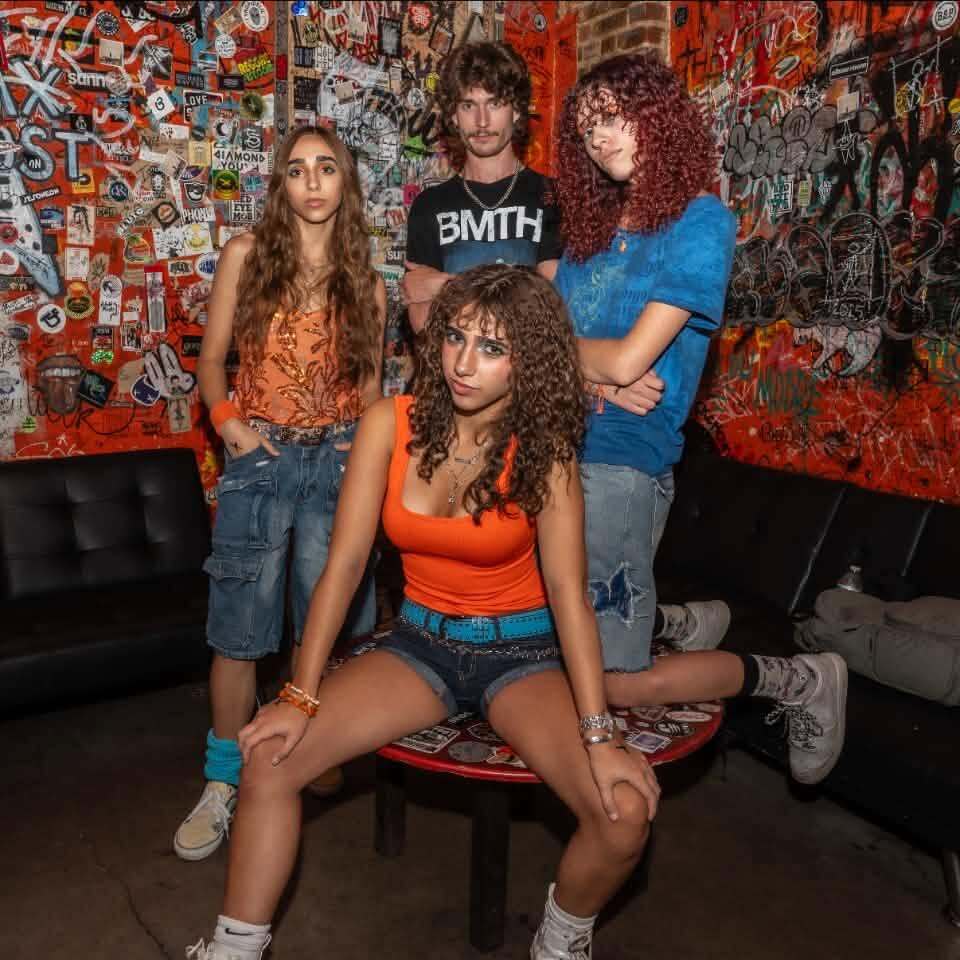
GOTTA GET OUT, the third album from Bela Salazar, Eloise Wong, and Lucia and Mila de la Garza, is the sound of a band discovering itself. Historically, The Linda Lindas have written individually and brought songs to the table. It was a process that served them well through their impressive, Ramones-esque debut Growing Up (2022) and its forceful follow-up No Obligation (2024). The two records took them from L.A. Chinatown all-ages scene mainstays to tours with Green Day and song placements in Inside Out 2. But for this one, they wanted something a little different.
“For the first time, we were presenting ideas to each other that weren’t fully formed. That was scary. But we worked through everything together and figured out the role each of us naturally plays,” Lucia explains. “Writing together was a way to find our collective sound,” adds Eloise. “Anything can work if we’re all shaping it together. We can write this slow indie song or a funky dance-y song. And it can all be for the band because we all worked on it together.”
At the house with the pool, “I haven't finished this, but do you wanna hear what I have?” became credo. Bela would conjure a “vibe” — a Logic loop, a guitar part twisted through pedals, a chord progression that was unmistakably hers — and they’d construct a song from there, working out lyrics in real time. They tinkered with synths for the first time, and graduated beyond bar chords. At a second retreat in Long Beach, a Mission Impossible marathon was the background ambiance as they worked out yet more songs — by the end, they had 30 total. “We discovered a lot about being very intentional,” says Lucia, who had recently graduated high school.
“Gotta Get Out” was the very first song they wrote. They didn’t intend to make it the title or the theme, but kept coming back to it, rewriting verses right before tracking vocals, clipboard and pen in hand, until, as Lucia says, “we made it mean something.” Opening the LP with big spicy synths and an ominous groove, it captures a central restlessness: the itchiness of being inside while the world moves — the desire to break out of the old habits, the old sounds, the old you.
The album’s visual world, designed by Eloise, makes the same argument through imagery: inspired by an old Audubon guidebook, clouds grow across the singles’ art from fair-weather cumulus to full cumulonimbus, viewed from a windowsill. The lyrics are rubber-stamped, the paper is glued, and every smudge is maintained. “I wanted it to be real human stuff,” Eloise says. “That’s what makes it special and unique and exciting to look at — it’s real.”
The songs themselves are the most varied and exciting The Linda Lindas have ever produced. Lucia notes that they focused on pushing the limits of their sound: “How heavy can we make the guitars? What about the drums? How many layers can we put on the vocals? How big can we make it sound?” They reveled in the process of making something cool, fun, and meaningful together. The result is an LP that sounds fully grown — an ambitious product of collective creation.
At 4:40, “Everybody Told Me” is their longest track to date: a slow-burning, Cure-inflected meditation on the meaning of life with a breakdown bridge and a languid fade-out. Lyrically it was all Bela “in her feels” — having a “quarterlife crisis at 21”— misty, serenely melancholic, singing “nothing ever lasts” and “trying to find where I belong.” “Closer” began as a bilingual song Bela and Lucia were working on while Eloise and Mila were at school, and transformed into a maximalist wall of guitars and layered vocals, featuring the one and only Hayley Williams. Matching the band’s IRL ethos, instead of sending a clip across the ether, Williams showed up to the studio. She helped write the bridge, and then they all went to Halloween Horror Nights at Universal Studios together. Hayley later told them “Closer” felt like listening to her teenage self.
Meanwhile, Eloise had been going to hardcore shows around L.A., getting inspired by the contagious, communal energy found in those small sweaty spaces. The loaded “Blood on Our Hands” was borne of that, paired with the specific, agonizing frustration of living inside fascistic late capitalism — the impossible math of daily complicity. Filled with drop-tuned guitars, drums recorded in a room big enough to make the cymbals sound massive, and Eloise’s striking, furious vocals, it’s about “trying your best to make a difference by doing the little things that you can do.” Early live performances of “Blood on Our Hands” have already produced pits.
Gotta Get Out experiments with genre yet stays cohesive as a whole, delivering a new delight at every turn. “Break” is pleasingly thrashy. “Okay” is pure pogo joy. Stormy blue ’80s hues condense in “Nothing Left,” a Siouxsie-esque rager about corporate greed and environmental destruction: “How much will your money mean / When you’ve got no air to breathe?,” Lucia sings, in bright chromatics. “The greed and inconsideration for others and the sacred balance of our environment is something that should concern us all because we all live here,” says Eloise. Closing cut “See You Next Time” goes somewhere else entirely: acoustic, dreamy, structured around a line Mila wrote — “If you burn your bridges, at least it’s good to have people to miss” — that felt too sneakily true to mess with.
There’s a concept in music called demo-itis: an attachment to the rough version, with the fuzzy parts still in there, that makes the polished final recording sound less alive. Producer Carlos de la Garza — Mila and Lucia’s dad, Eloise’s uncle, Bela’s honorary uncle, and also the GRAMMY Award-winning producer for Paramore, Bad Religion, and Best Coast — found a way around it by keeping fragments of the Palm Springs and Long Beach demos in the final recordings: the funny guitar leads, the unpolished synth takes, those beautiful mistakes. It’s the same instinct behind the handmade artwork, the no-phones retreat, and the daily swims — “That rawness,” says Eloise, “is essential to life. To keeping it exciting, keeping it fun, and keeping it human.”
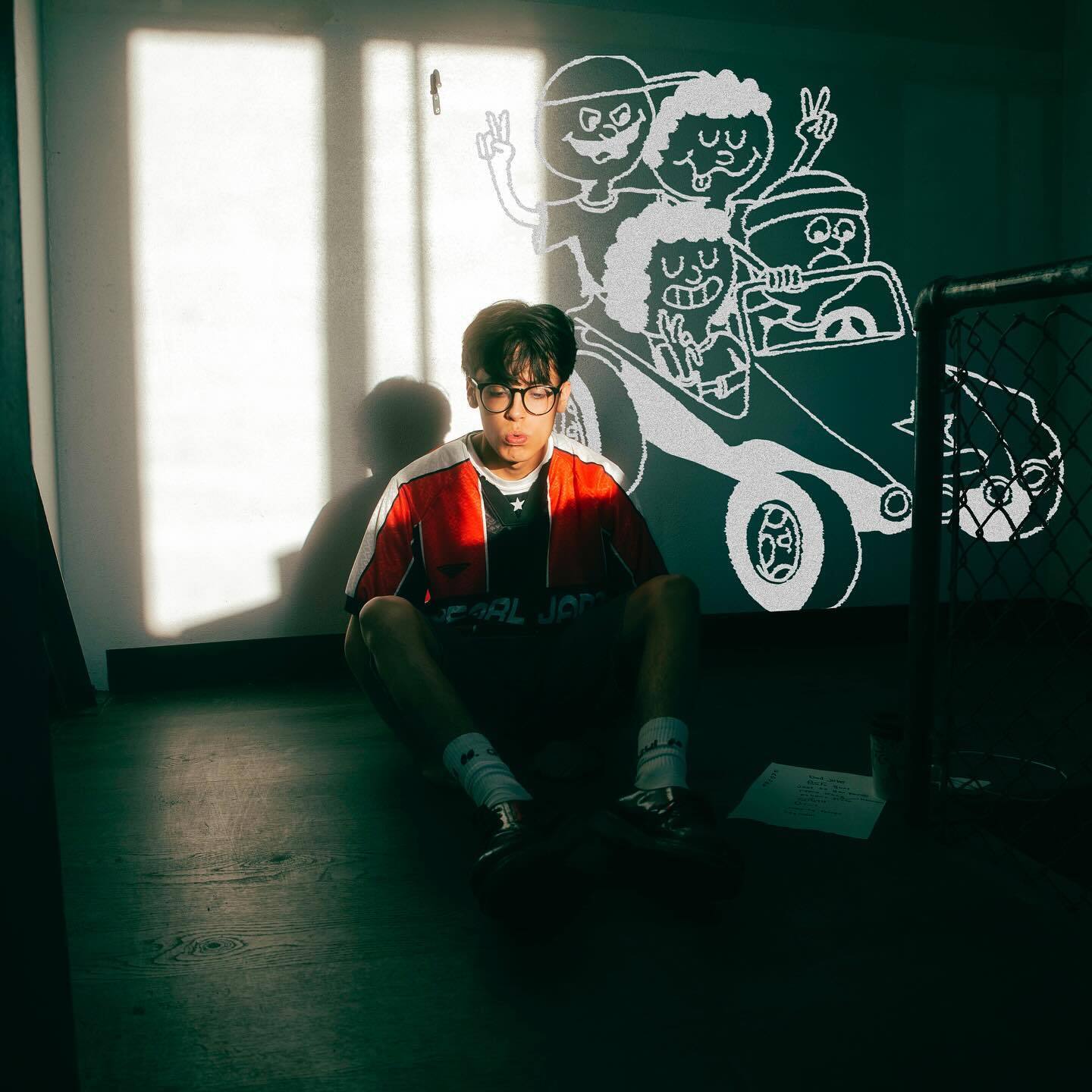
adan diaz is a 21-year-old Mexican-American independent artist from Chicago, Illinois, whose sound can be described as an indie lovechild between Oliver Tree and Weezer. adan quickly became a go-to tour opener, supporting acts like Saint Motel, Good Kid, LAUNDRY DAY, JAWNY, The Linda Lindas, and more. Before having a manager or agent on board, adan made his festival debut playing the Lollapalooza BMI stage back in 2024 opening for Chappell Roan (who did in fact play all the way on the other side of the fest but still). In 2024, adan also went on his first-ever headline tour, playing rooms in NYC, LA, and of course, Chicago.
James Gunn has been a longtime fan, recently featuring adan's song ‘bestfriends girl’ on the Official Superman Playlist , and his year-end favorites lists, which is something adan will never not geek out about.
adan consumes, on average, 8 hours of stand-up comedy per day. Having grown up on an ungodly amount of screen time & being in high school during the Covid-19 pandemic, self-isolation drew him to internet comedy and reddit's r/songwriting and r/cartooning, inspiring the early prototype of his imaginatively self-deprecating lyricism. His Instagram covers of artists like Rex Orange County gained online traction, and soon a fan-edit of his debut single 'Legroom' led to virality, a record deal at fifteen, and an adolescence of touring, performing, and writing (while simultaneously taking college classes online).
adan will always call Chicago home, but relocated to Los Angeles in 2026. adan has become a regular collaborator with legendary artist, producer, and songwriter Dan Wilson, eventually signing a publishing deal to his joint-venture with Pulse Recordings, Supermoon Songs.